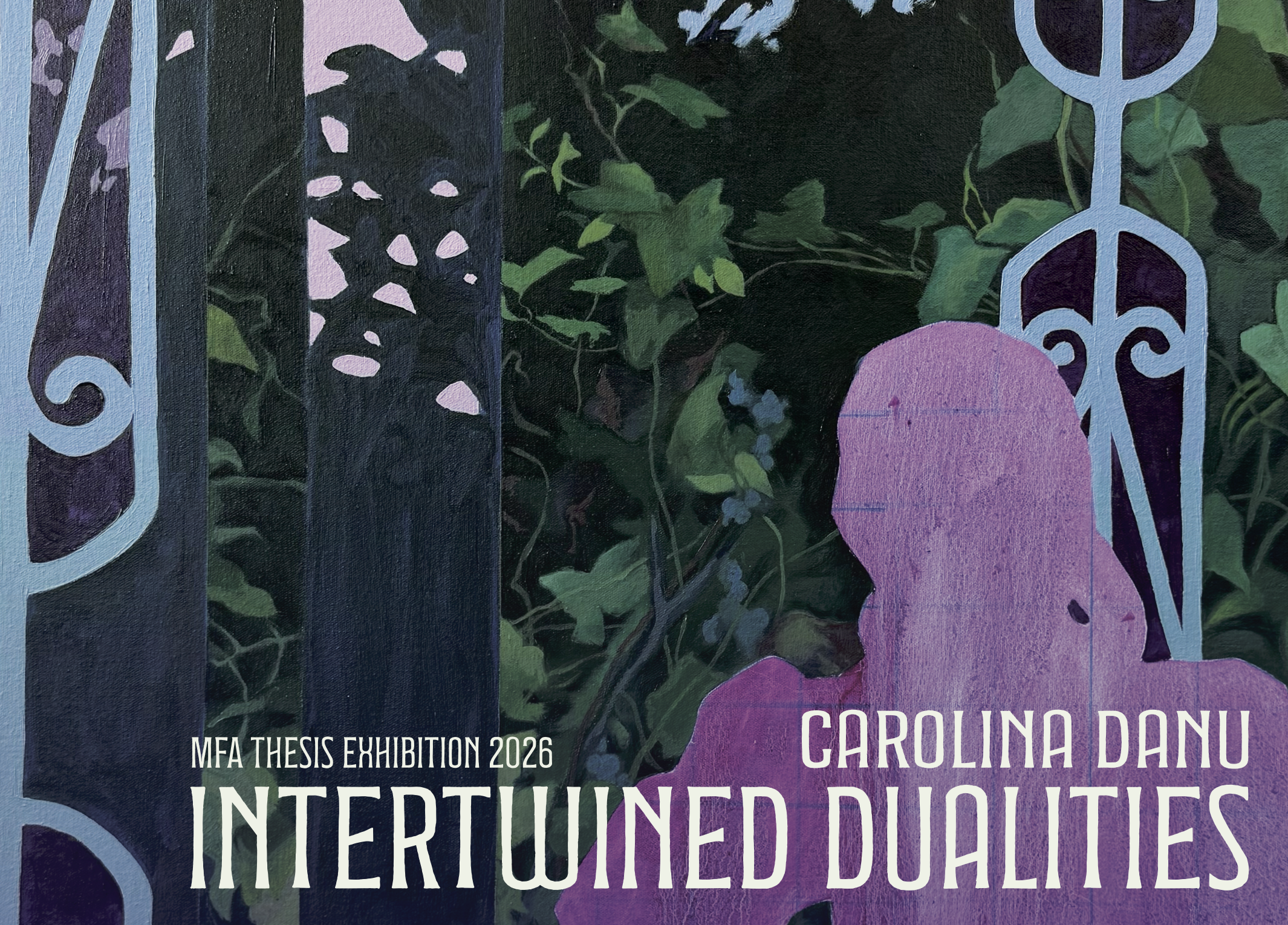
MFA Thesis Exhibition
Intertwined Dualities explores the affective dimensions of diaspora, in which experiences of “rupture”—a break in history, geography, and belonging that produces complex feelings of home and displacement—are mediated and negotiated through art. In A Map to the Door of No Return, Dionne Brand writes of diaspora as “a rupture in history, a rupture in the quality of being… a physical rupture, a rupture of geography” (Brand, 2001). By foregrounding the relationship between temporal and spatial dislocation and “a rupture in the quality of being,” Brand conceives of diaspora not as a singular event, but as an incomplete and ongoing experience. Drawing on this framework, my artwork approaches diaspora as both a methodology and a positionality, situating my practice within a persistent state of temporal and emotional in-betweenness.
Having immigrated to the United States as a child, my relationship to Moldova has always felt fragile, as it is continuously mediated through memory, distance, and nostalgia. My practice seeks to capture this fragility. Functioning as a form of visual archive or diary, it collects and reassembles fragments of memory in ways that mirror its inherent instability. As memory erodes and is reshaped over time, my work takes on a surreal aesthetic quality that collapses spatial and temporal boundaries. Sitting at the threshold of multiple places and times, the visual motifs in my work generate a narrative of home that moves between past and present, memory and reality, and Moldova and California. In doing so, it constructs temporal and spatial dualities that simultaneously map onto my own evolving positionality in relation to them.
A recurring foundational theme in my work is the concept of homing. Avtar Brah introduces the concept of “homing desires,” which she defines as “the desire to feel at home achieved by physically or symbolically (re)constituting spaces which provide some kind of ontological security in the context of migration” (Brah, 1996). For diasporic subjects, homing is an affective and material process that produces aspirations, evokes sensory memory, and requires acts of emotional negotiation and material reconstitution. I approach homing as an ongoing, ever-evolving process without a prescribed end result, and my work reflects this through the constant reevaluation and reconstruction of my relationships to the places I call home—the memories, moments and people that constitute them. Homing is rendered simultaneously across material and immaterial, and imaginative and concrete. At its core, homing is a relational process.
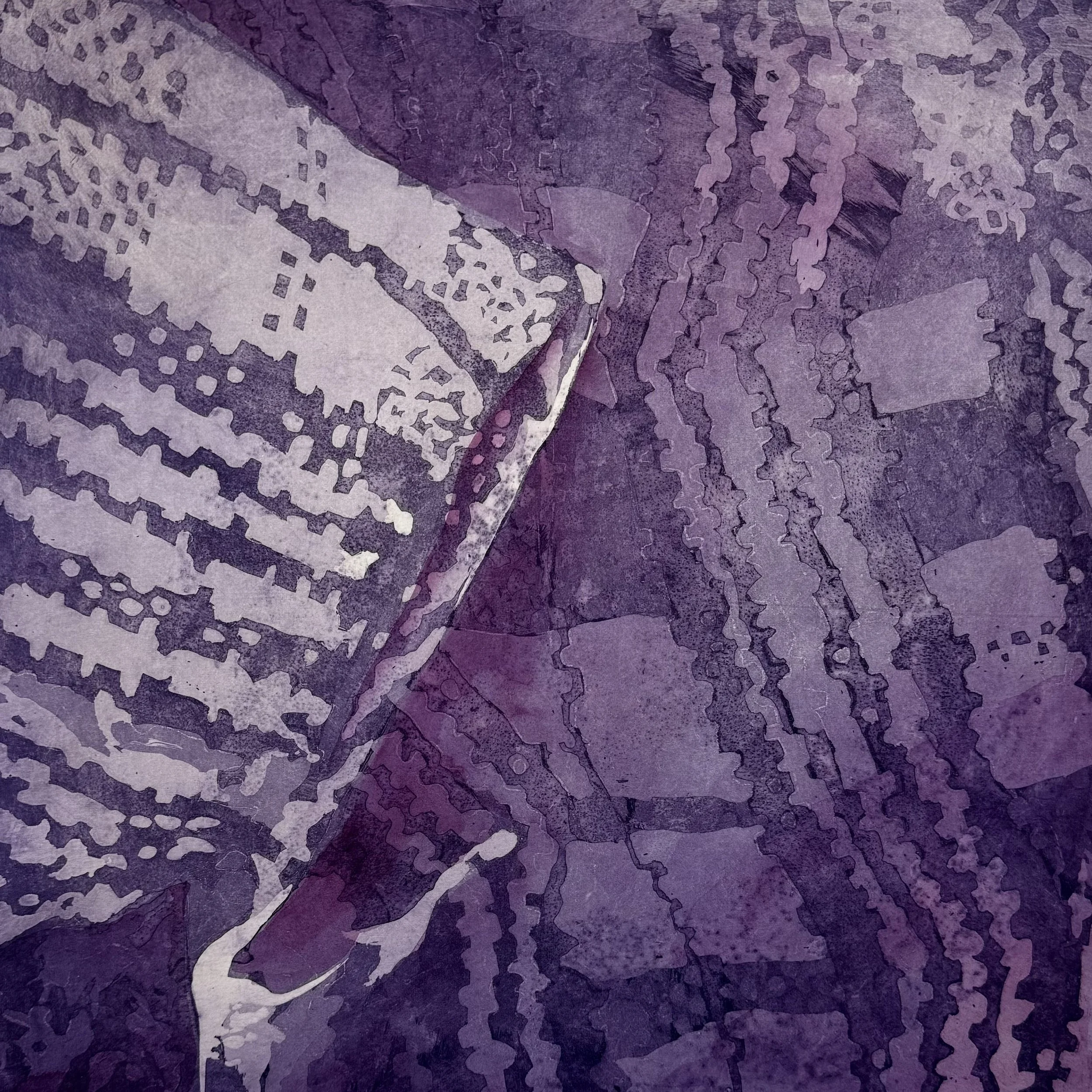
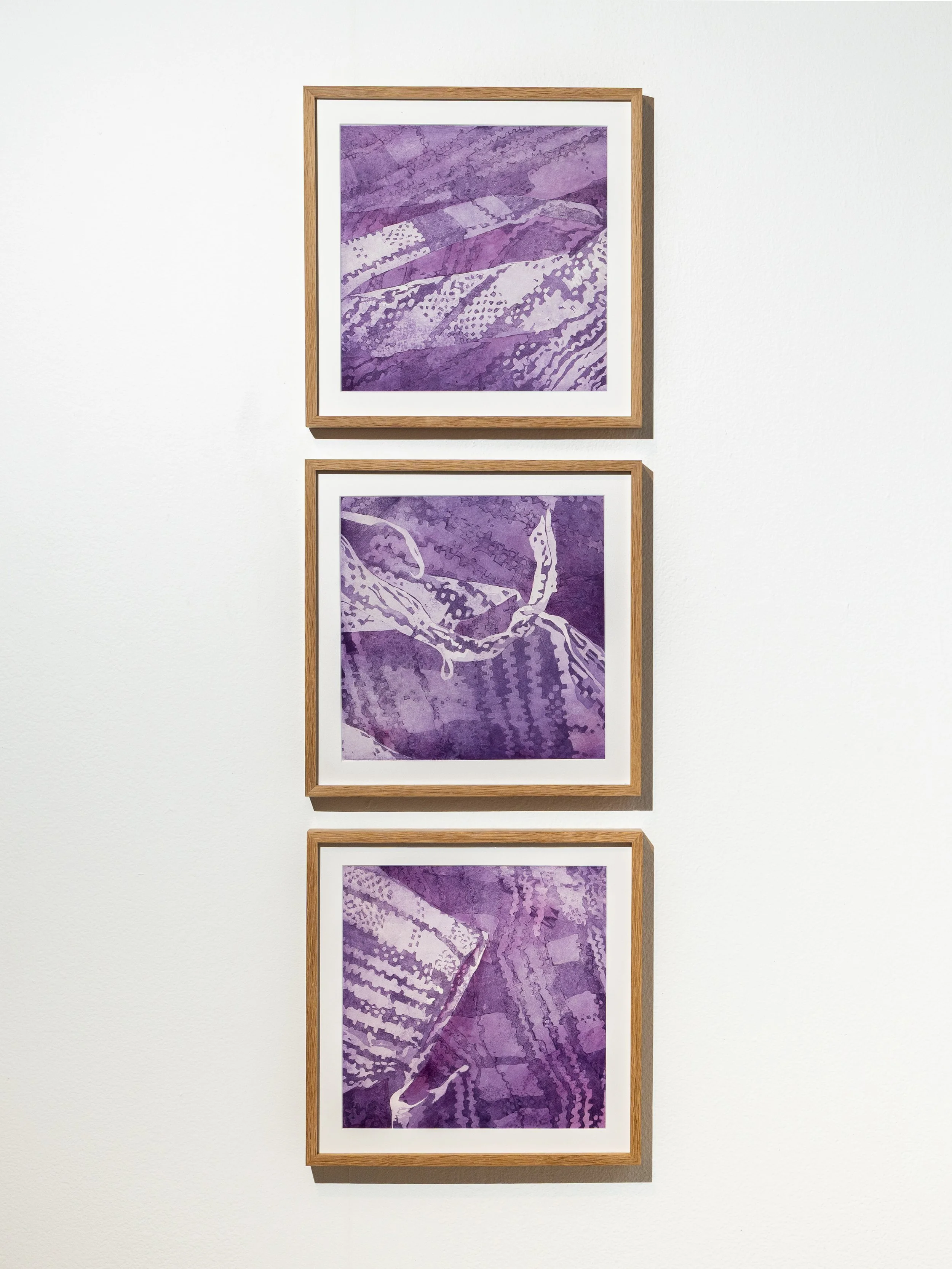
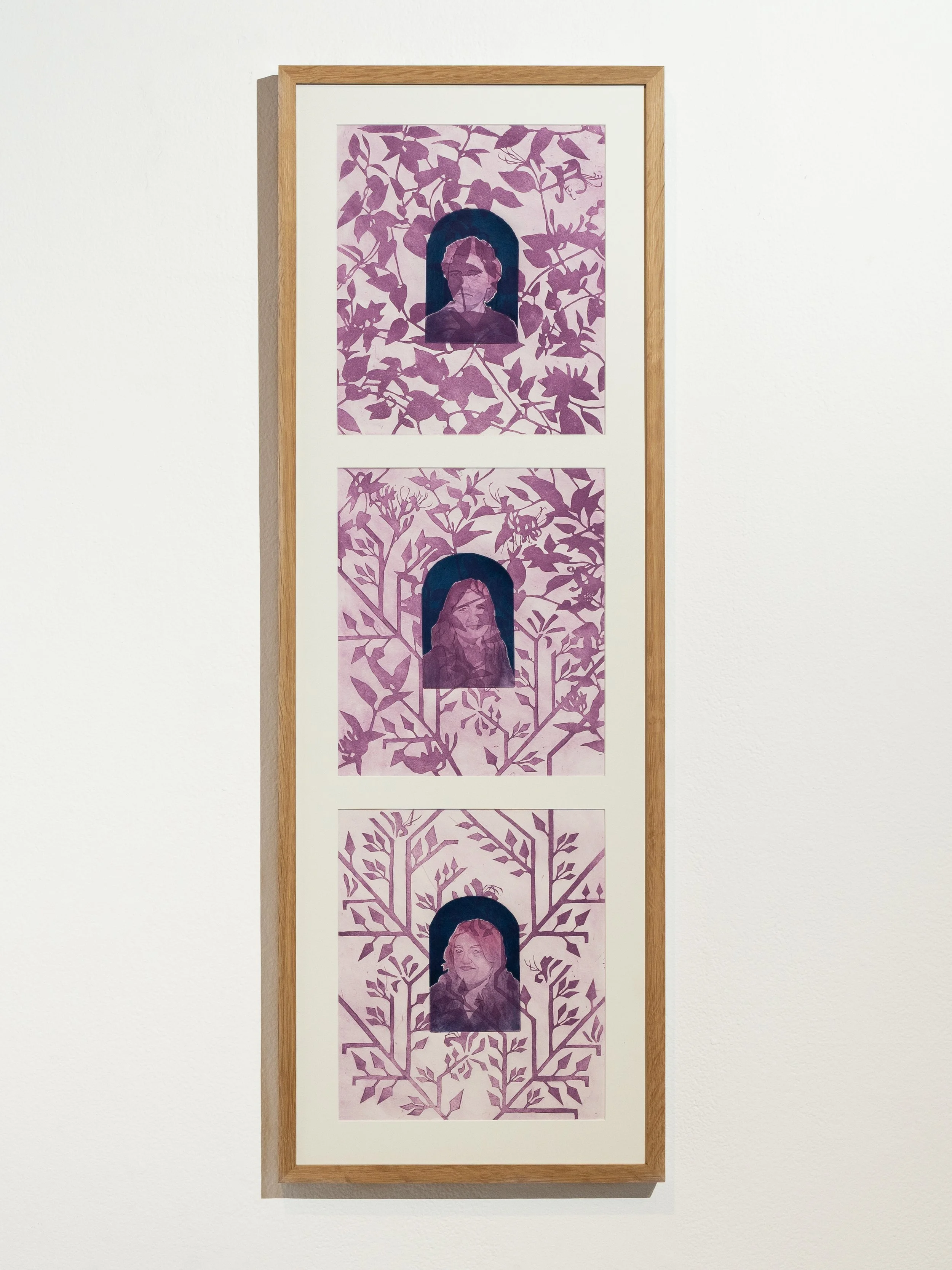
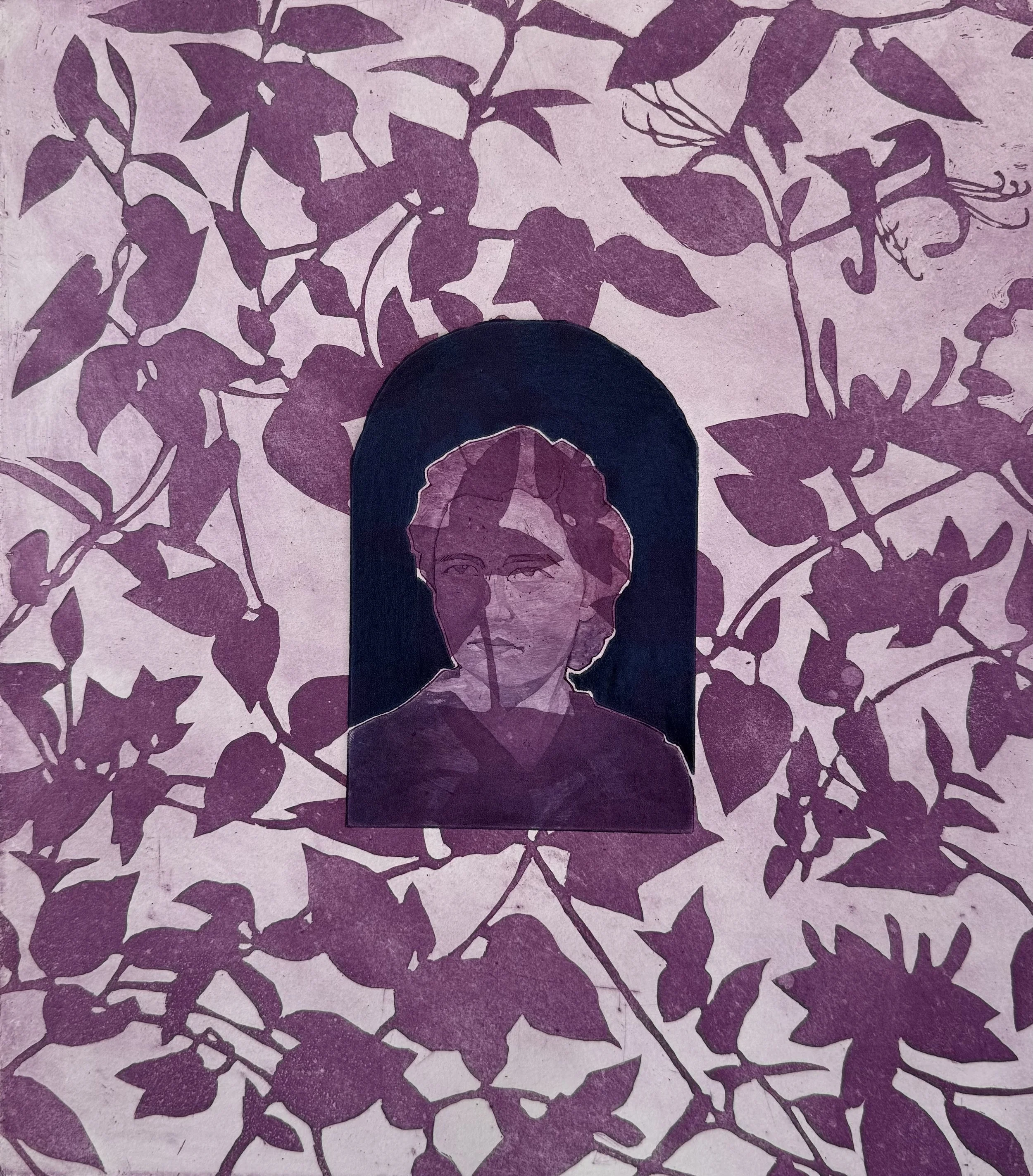
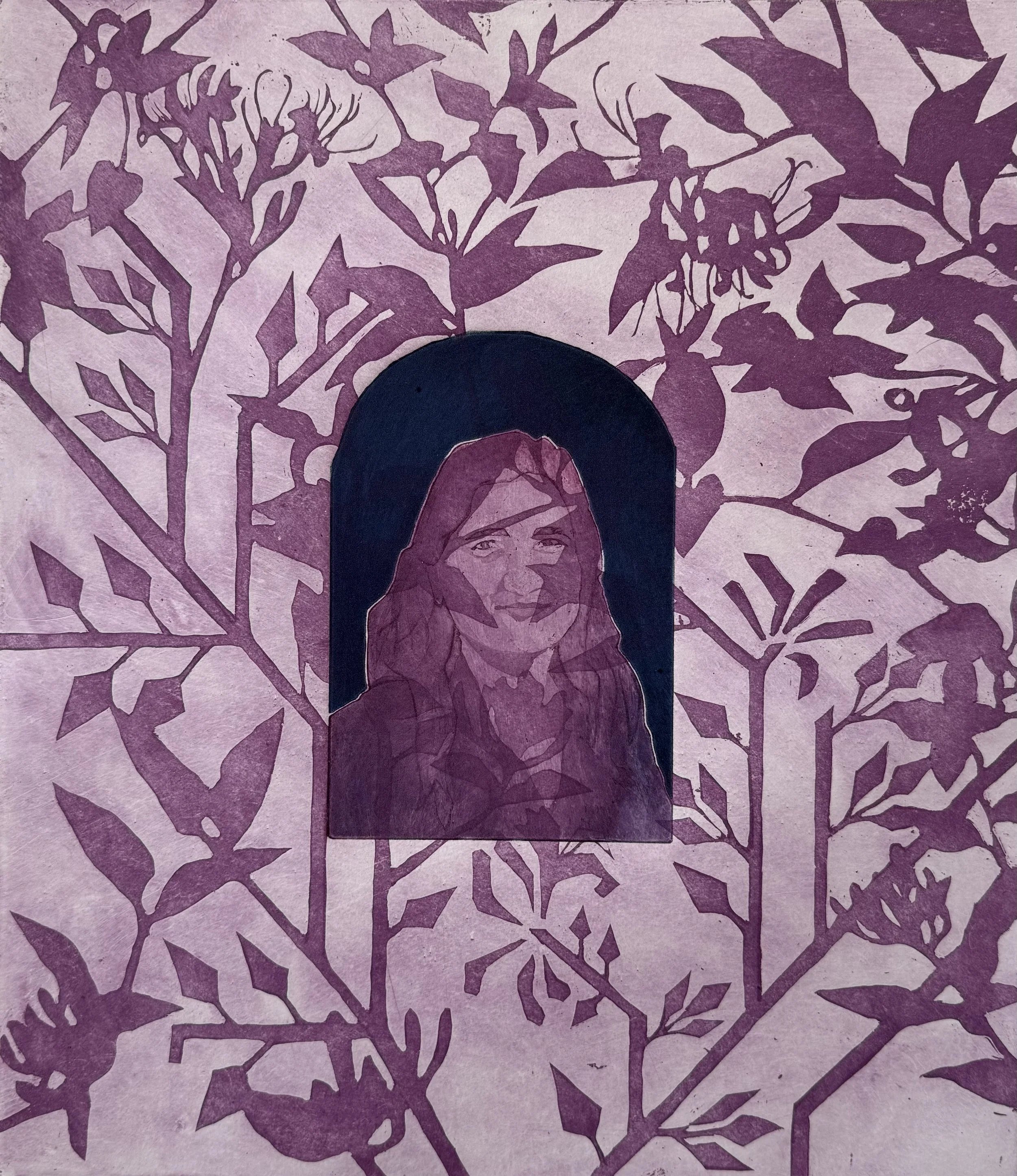
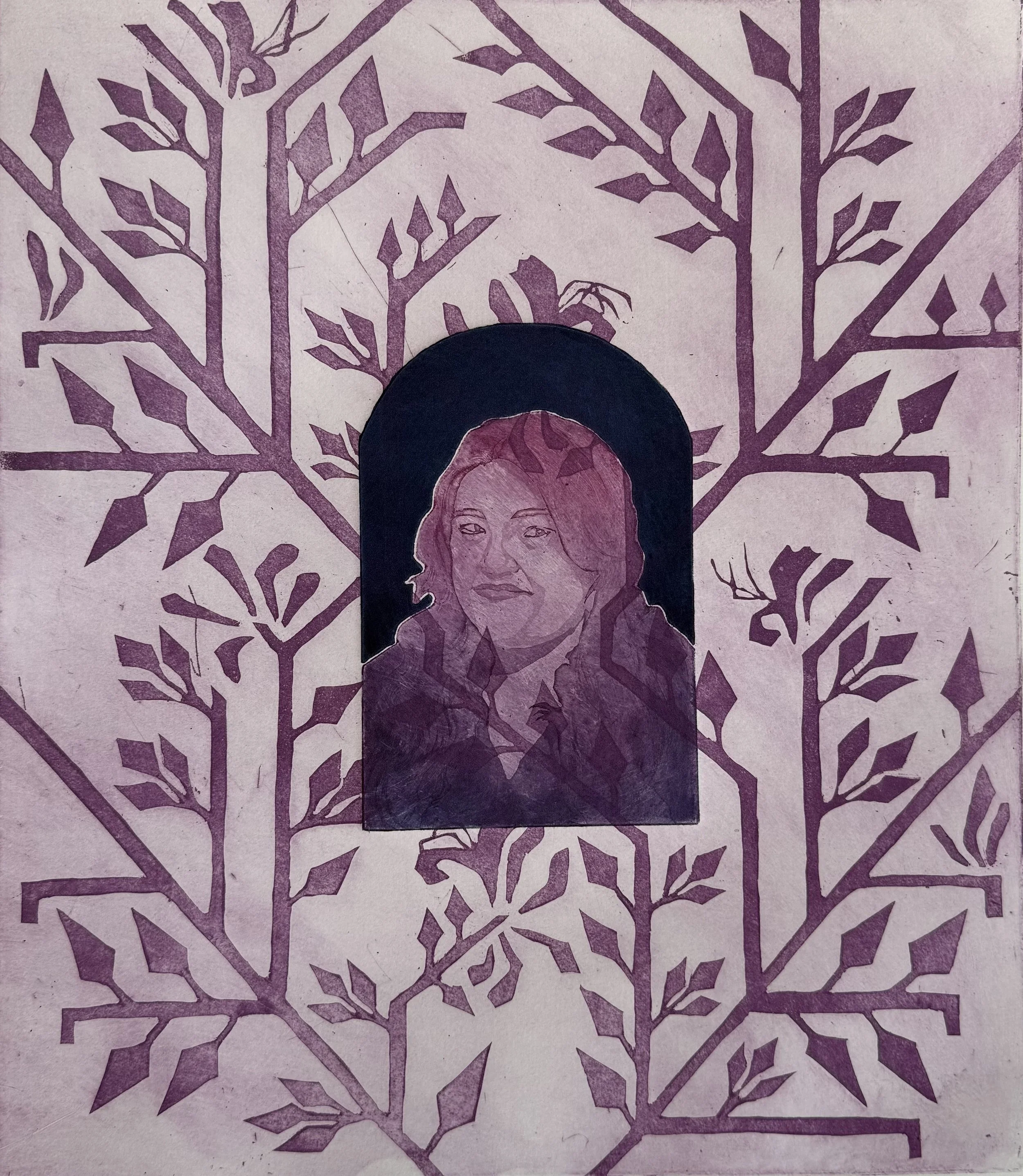
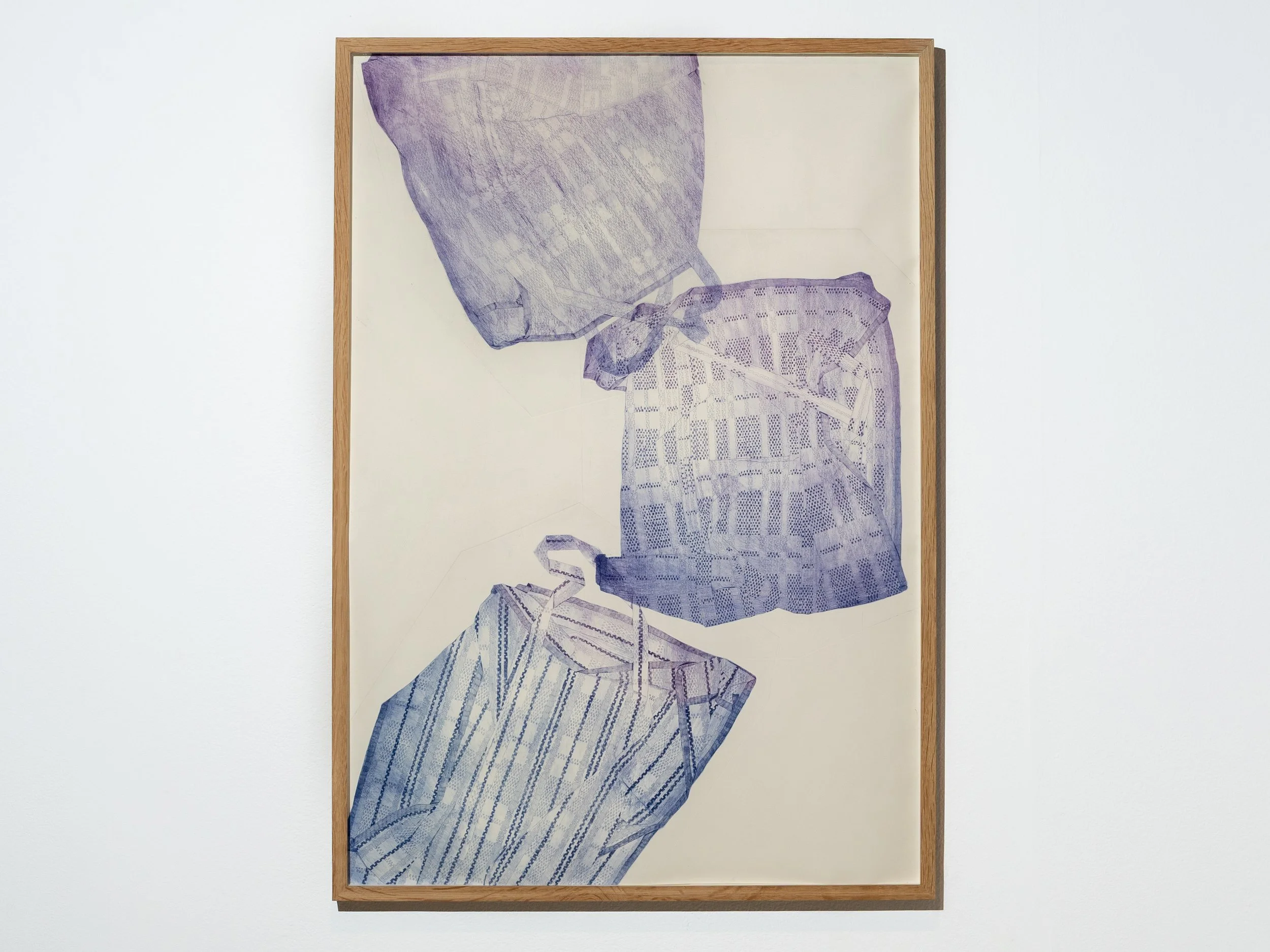
My practice considers the visual field as a site of homing, holding disparate visual cues, histories, and temporalities in relation. It brings together recurring motifs of domestic space, landscape, and geometric patterns. Images of my childhood home and its overgrown garden in a suburb of Moldova’s capital function as sites of memory and familial connection, shaped by the labor and care of my mother and grandparents. These organic forms are juxtaposed with the geometric architectures of my birth city—often shaped by Soviet modernism—and interwoven with the natural landscapes of California, negotiating visually between distinct places, histories, and temporalities. Geometric patterning extends beyond architecture through references to everyday material culture, such as the woven market bags ubiquitous in Moldovan life, whose worn surfaces and repetitive designs evoke labor, memory, and departure. Drawing further from textile traditions, including rug weaving historically associated with women’s labor and Moldovan national identity, I translate memory and environment into patterned forms that link the landscapes of Moldova and California, positioning homing as an ongoing process of assembling belonging across distance
Throughout this body of work, I place increasing emphasis on my home in Moldova through imagery of the city, my childhood home and garden, and my familiar relationships. Over time, Moldova has become a “place of no return,” a site of “longing, roots and identity,” through which absence is continually felt and reconfigured (Stella and Binnie, 2024). I stay with and in this absence to allow its effect to take form within the work. Rather than resolving the condition of belonging “neither here nor there,” I hold anxiety and longing in relation and tension. My practice understands homing as a dynamic negotiation between displacement and emplacement, in which the “here” and the “there” are brought into a visual field of relation. This negotiation gives rise to an emergent, third space that holds the grief and loss shaped by migration, while sustaining forms of comfort, familiarity, and nostalgia. Within this space, homing becomes a site of possibility to imagine and create new attachments, relationships, and modes of belonging in the present, without negating the enduring presence of what has been left behind. My work lingers in this threshold of rupture, where absence and memory converge to shape a belonging that is as fragile as it is becoming.

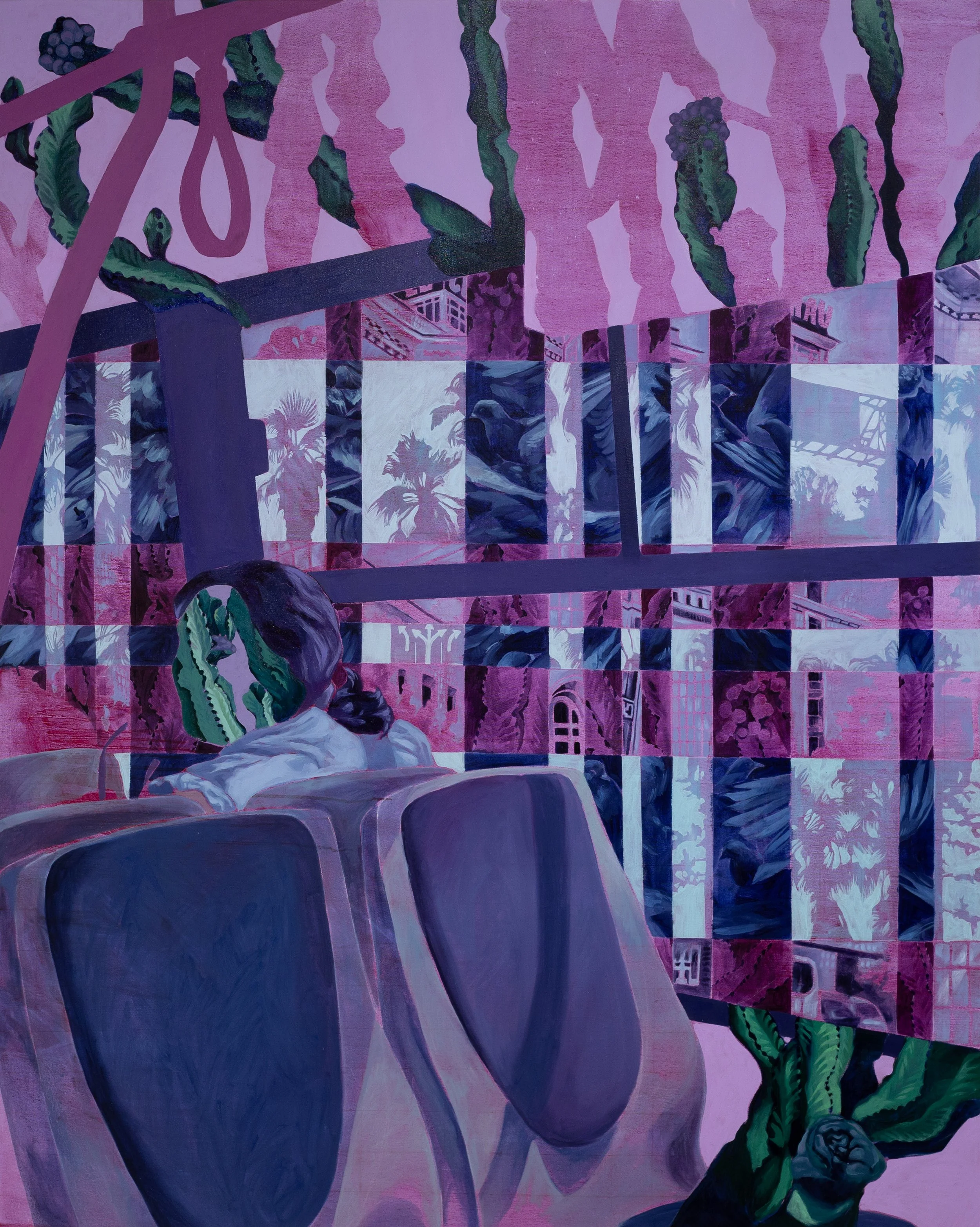
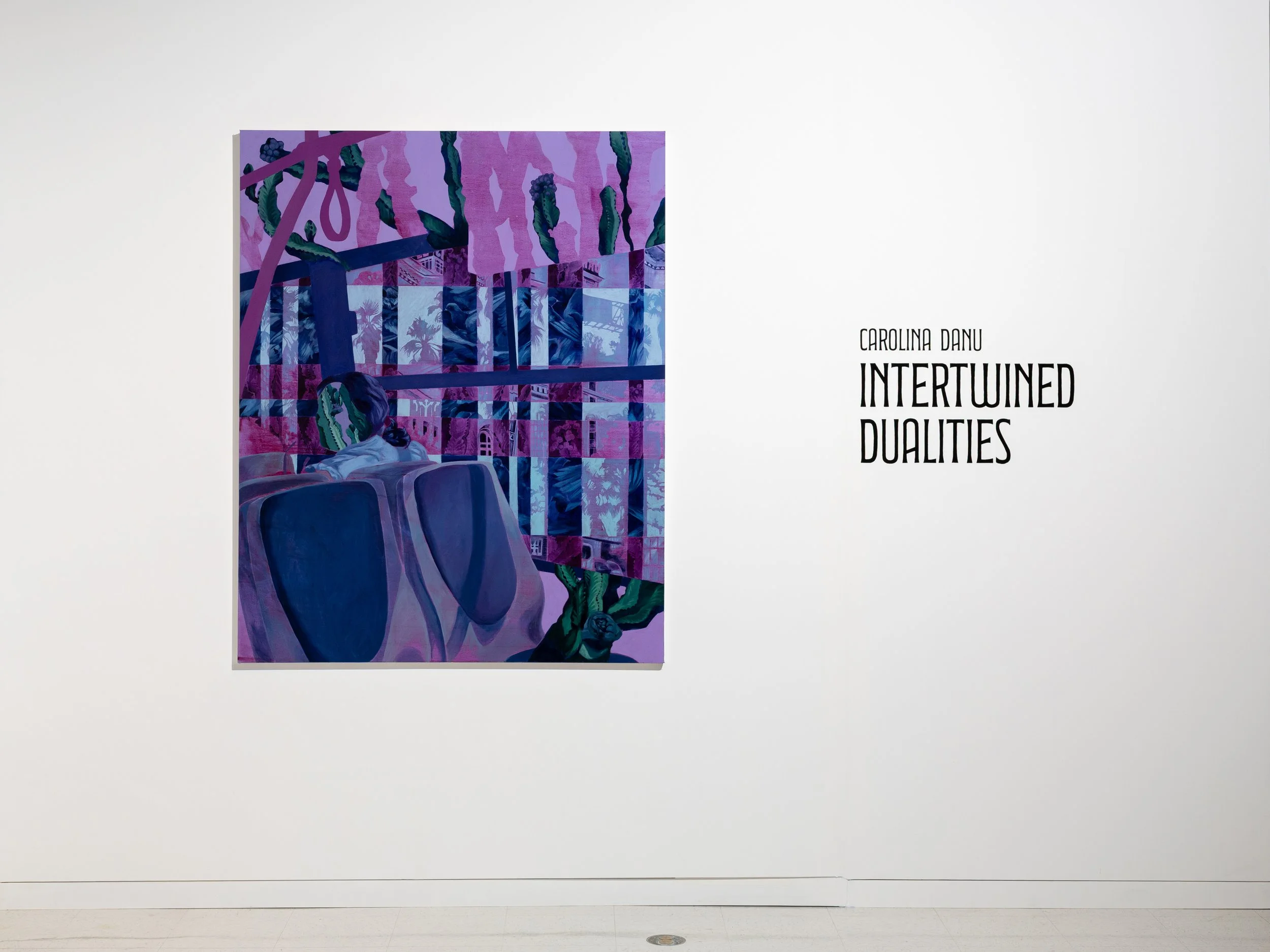
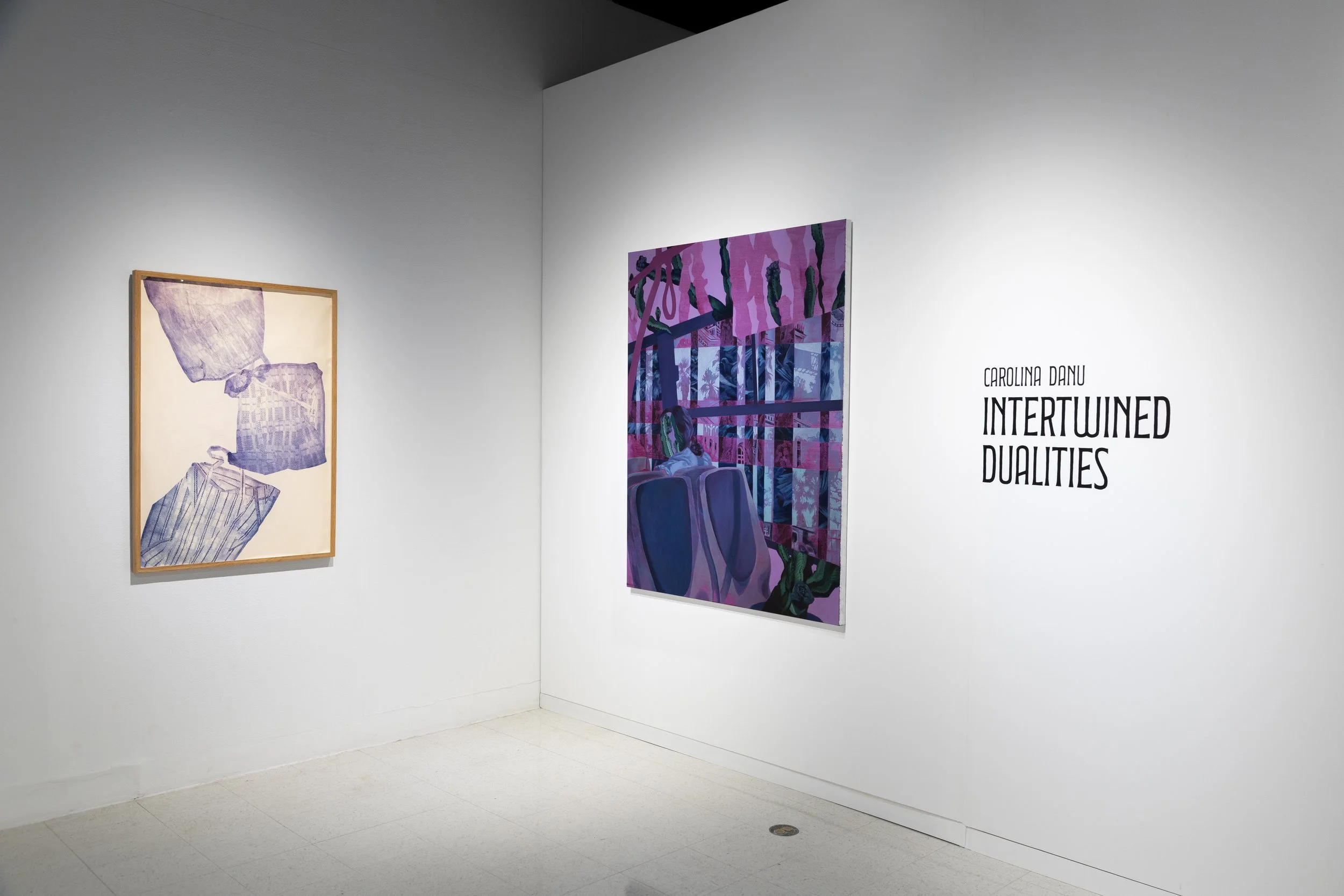
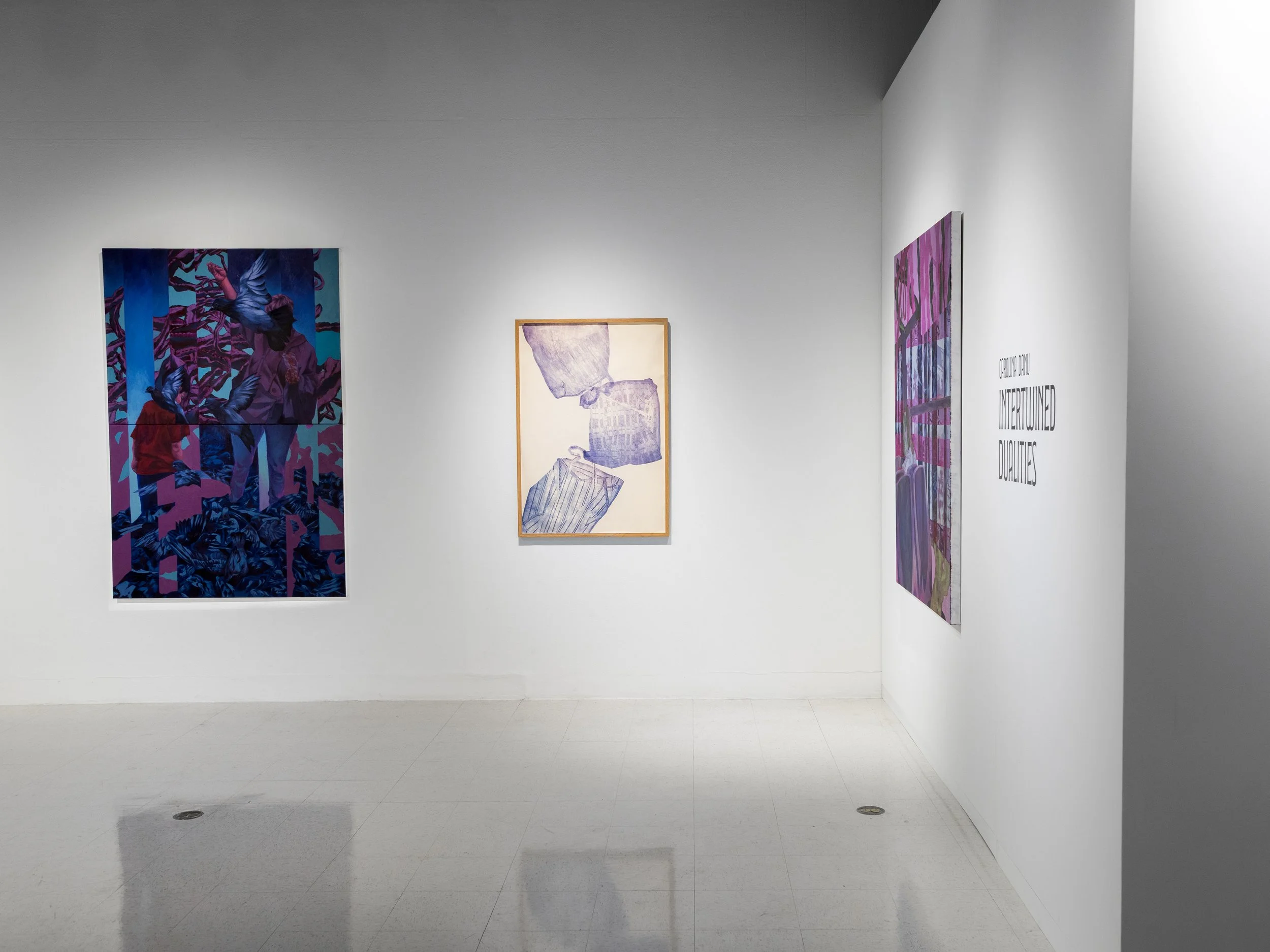
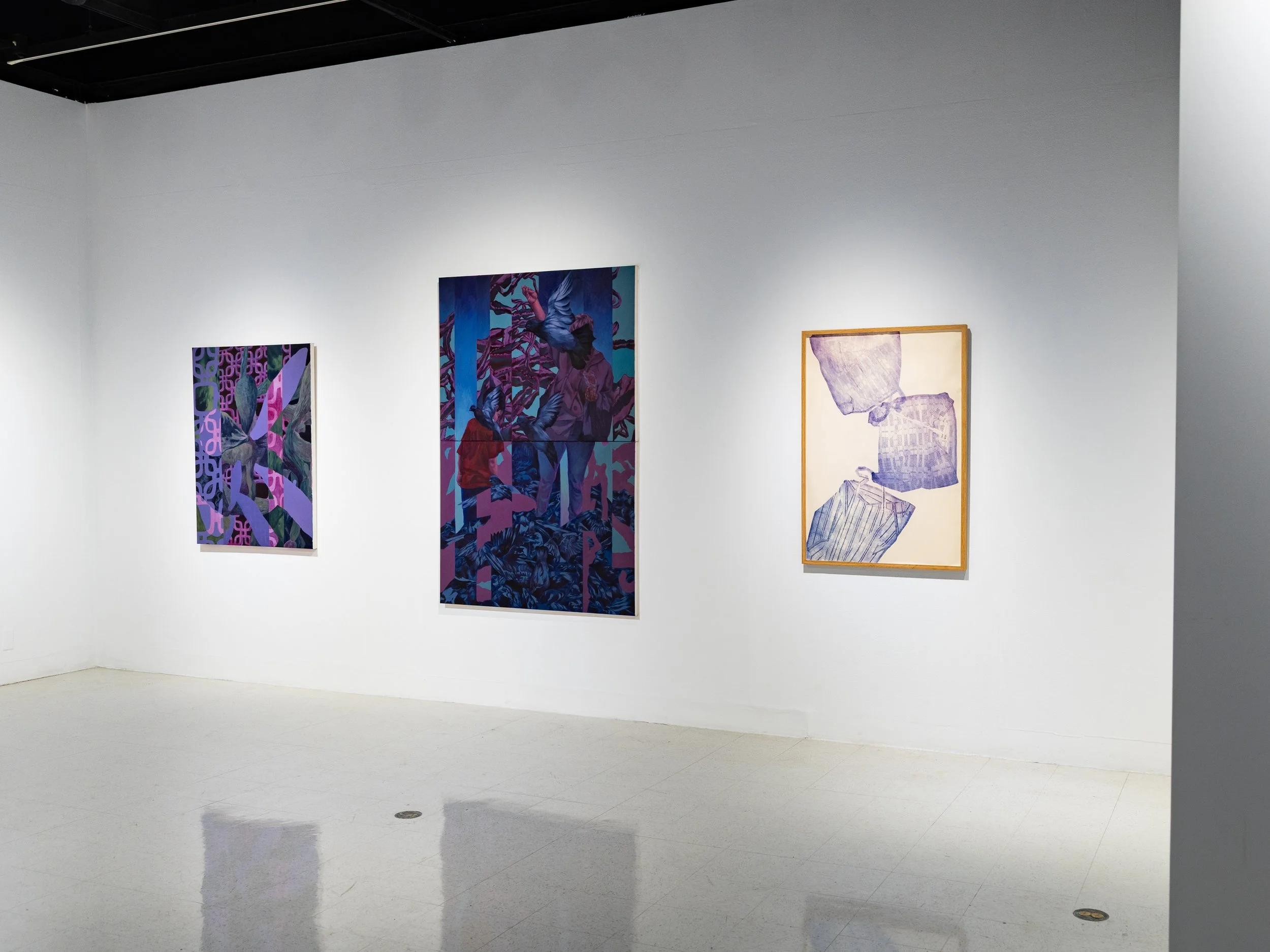
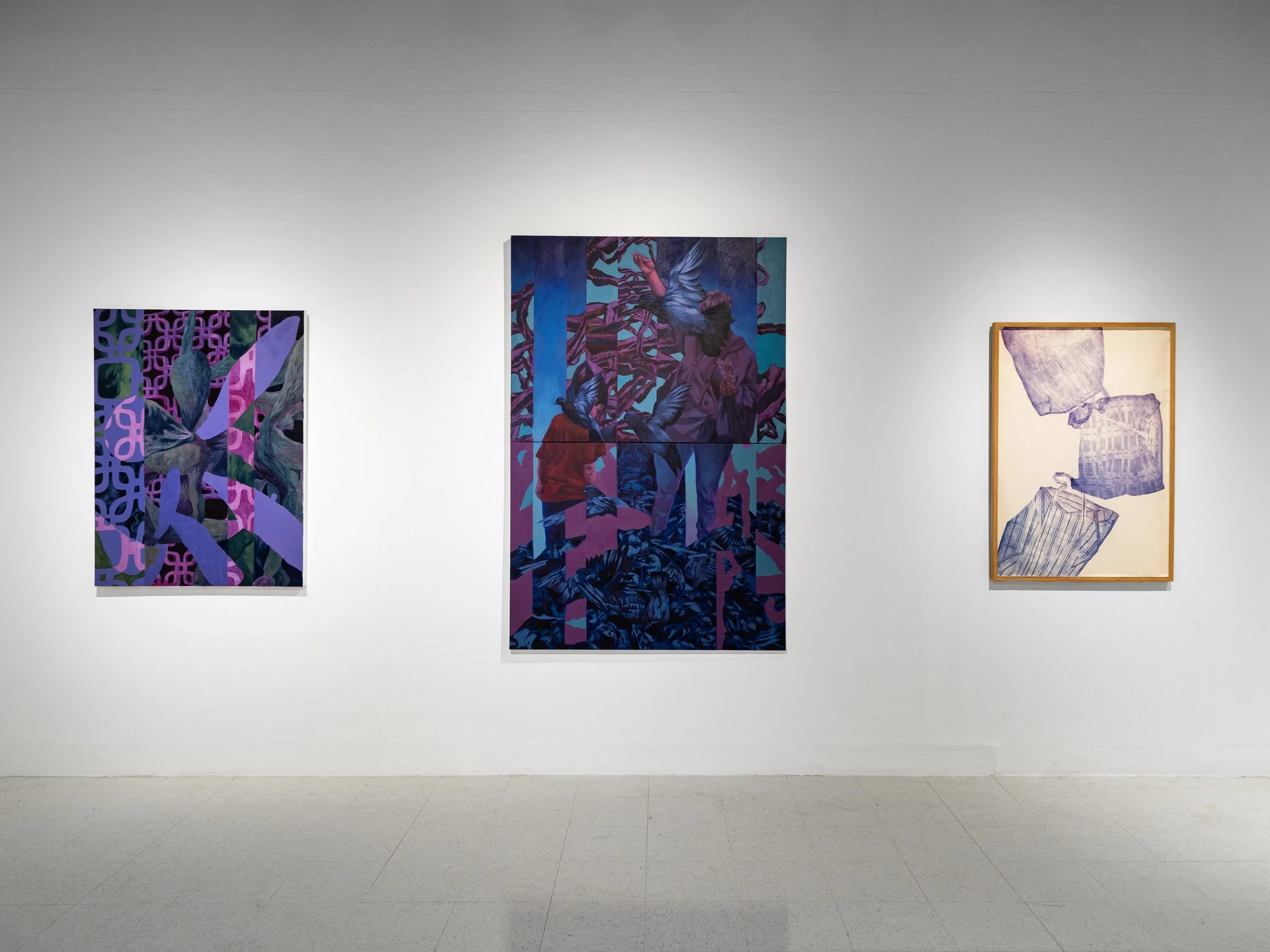
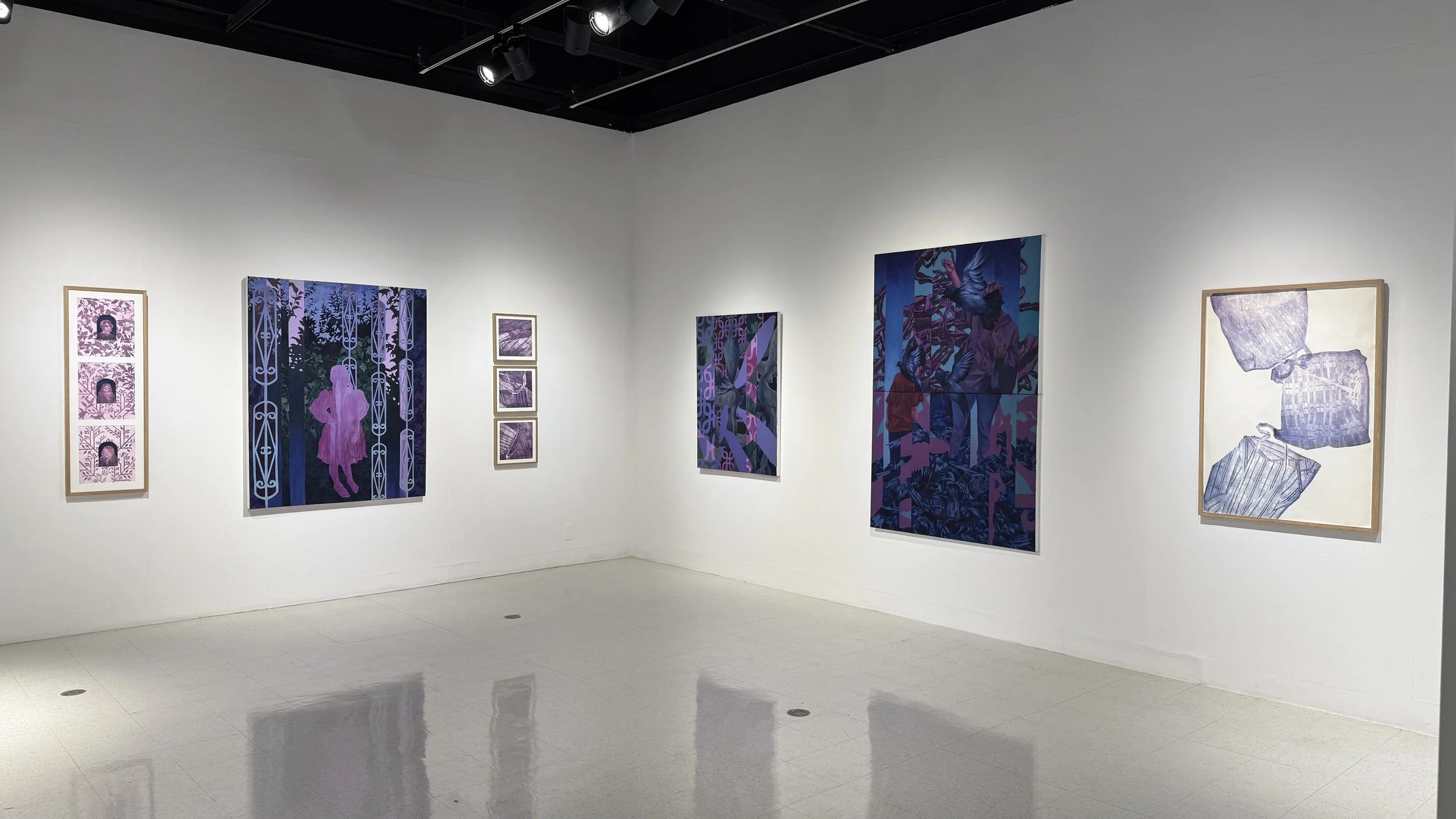
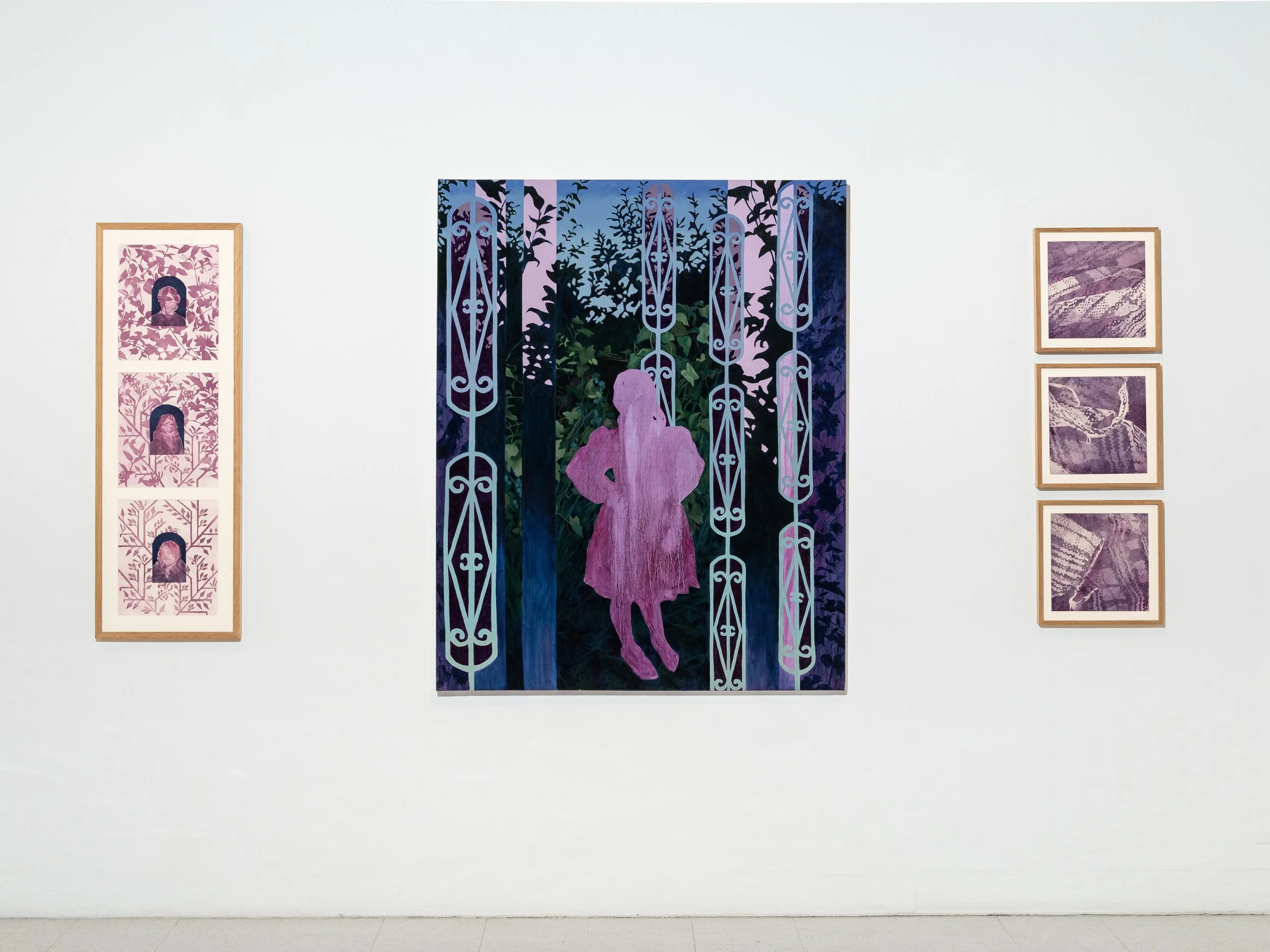
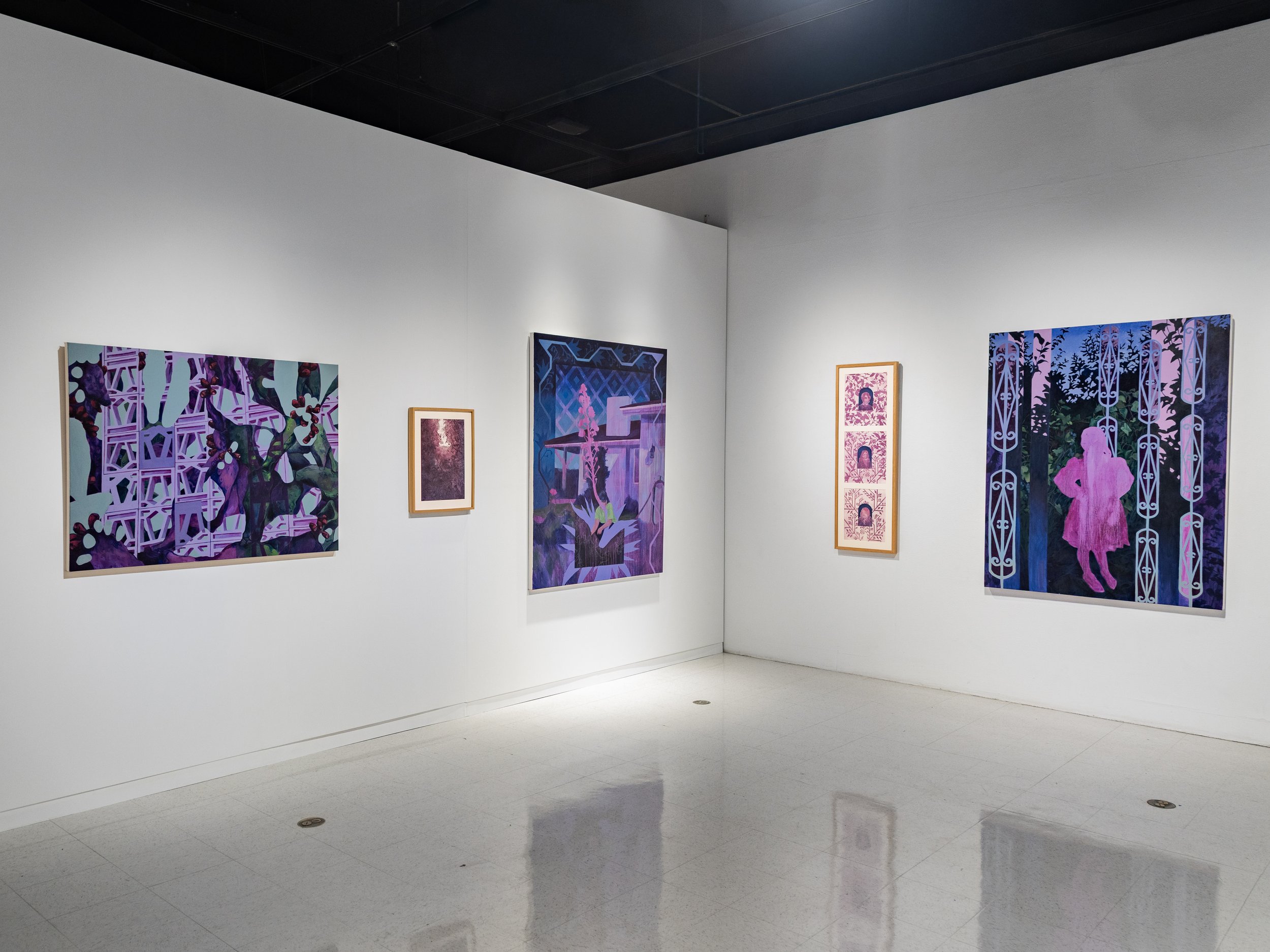
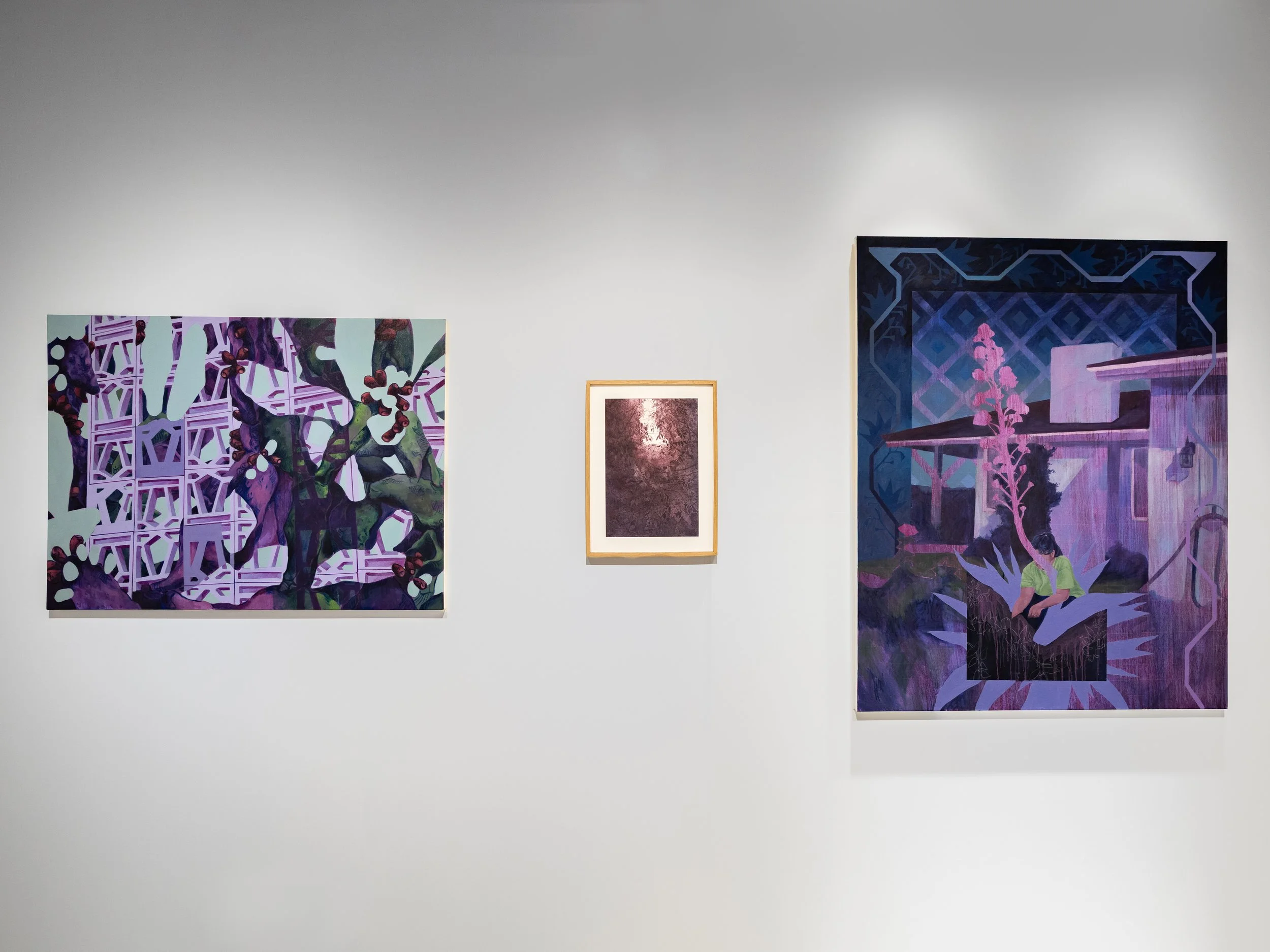
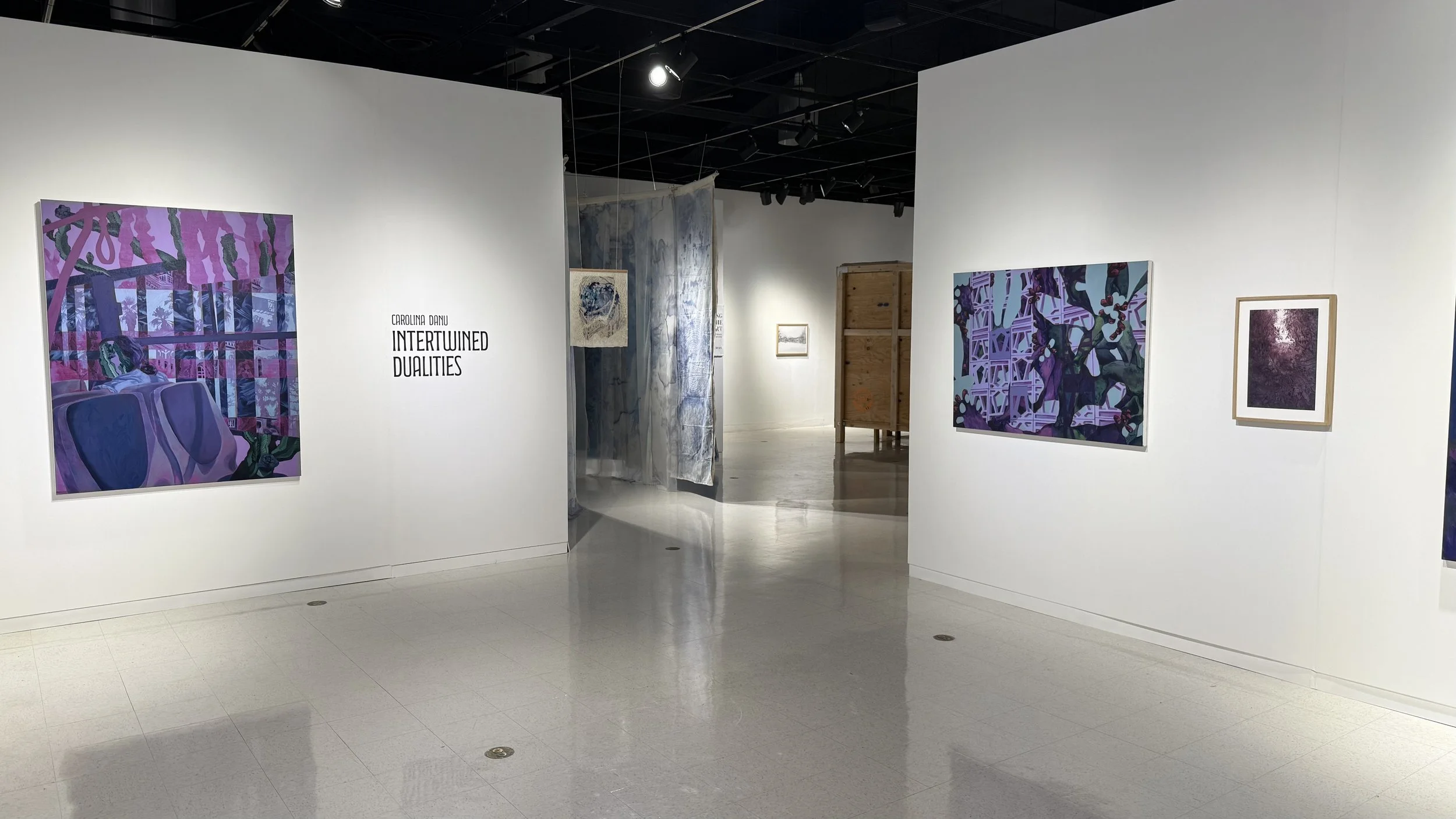
Fragments, 2026; Oil on canvas, 5' x 4'
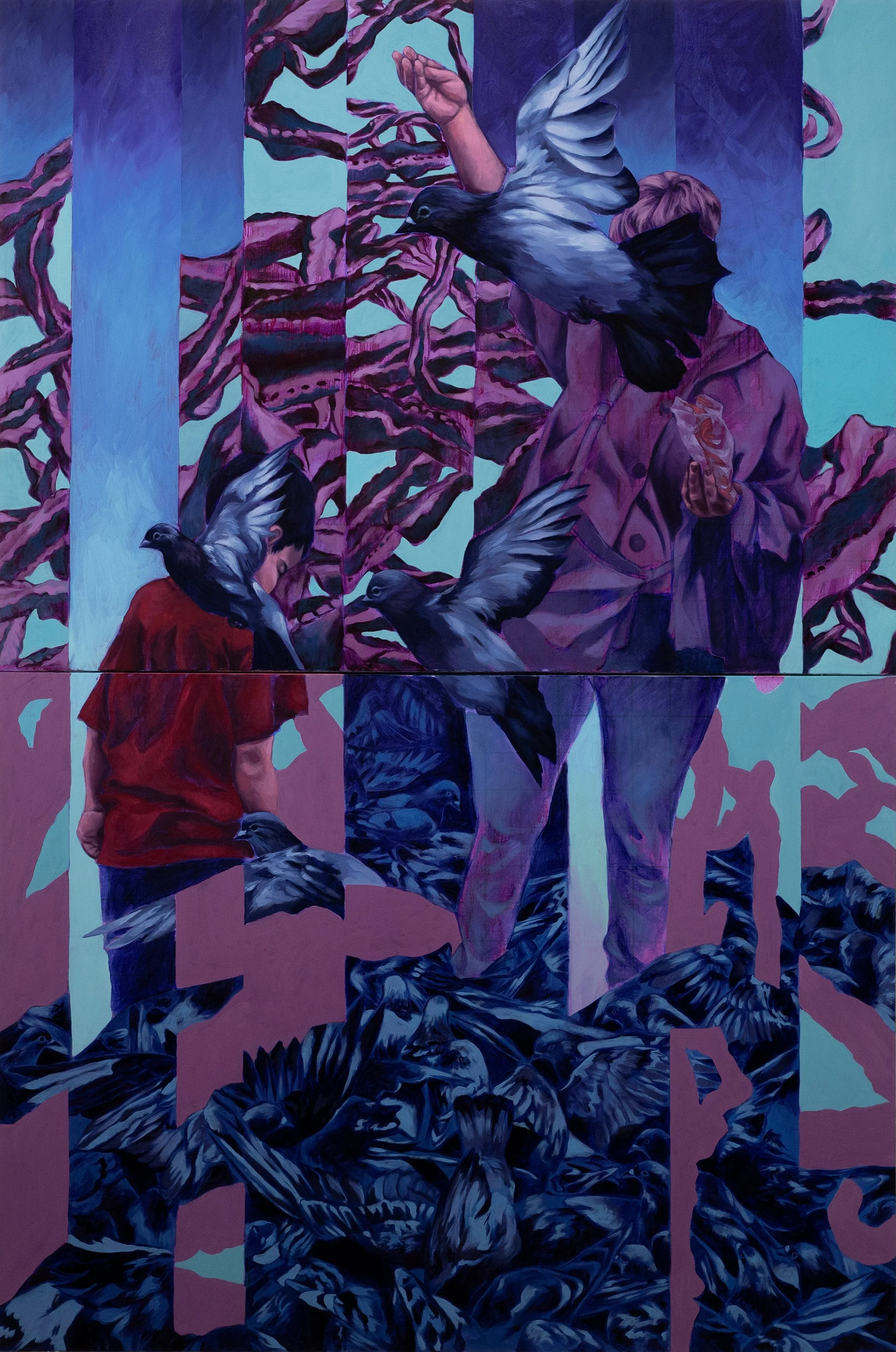
Resonance, 2026; Oil on canvas, 6' x 4'
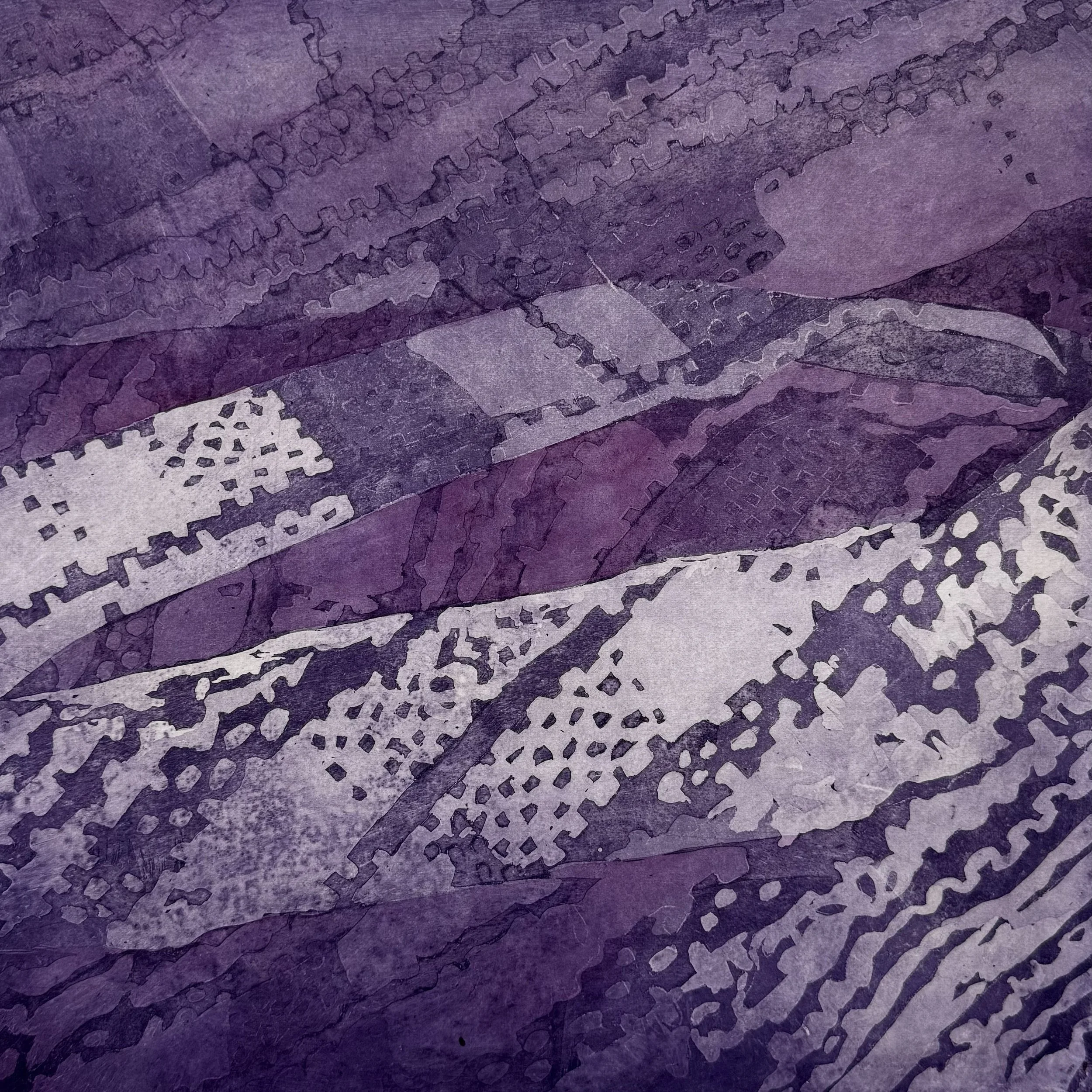
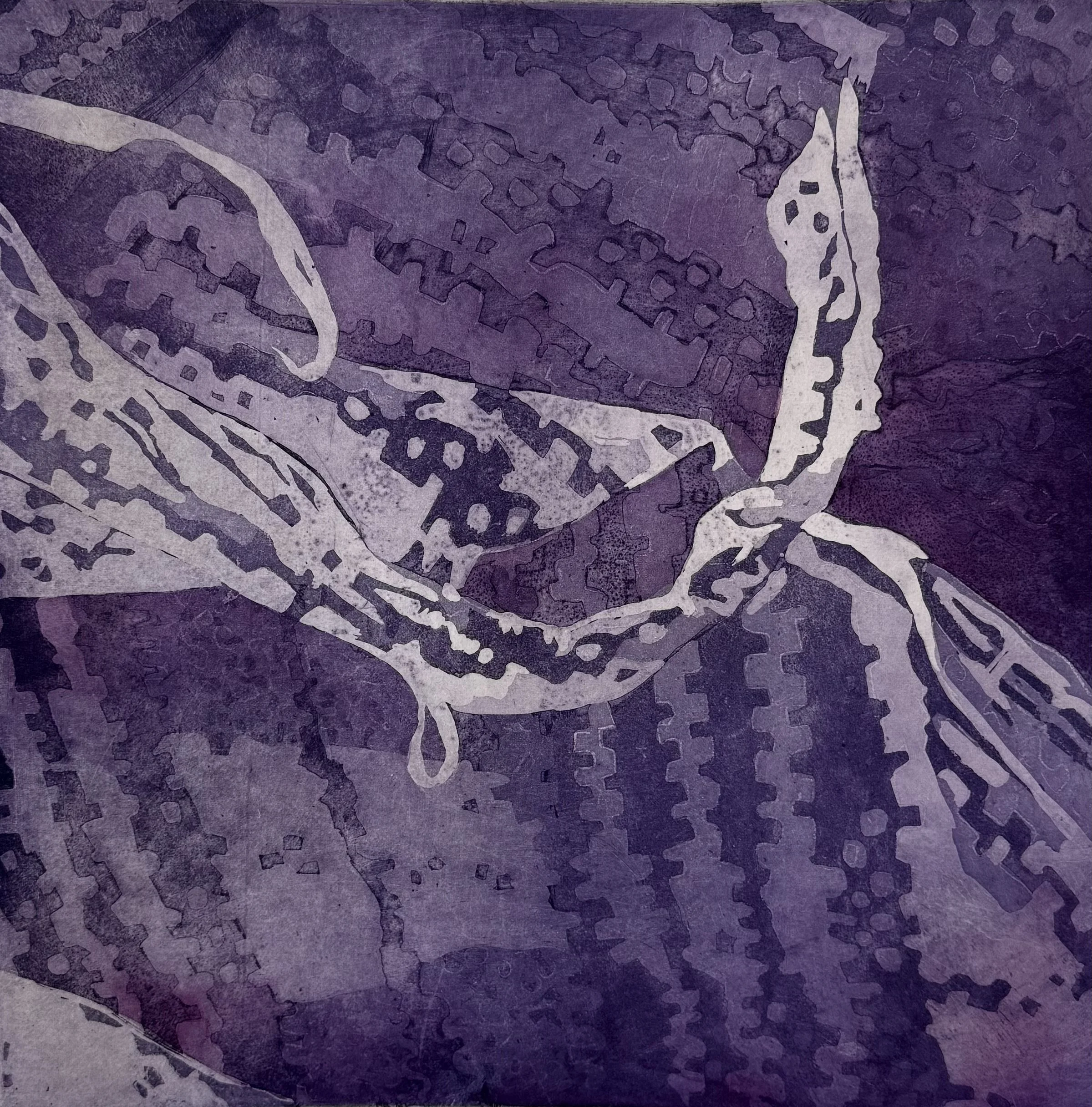
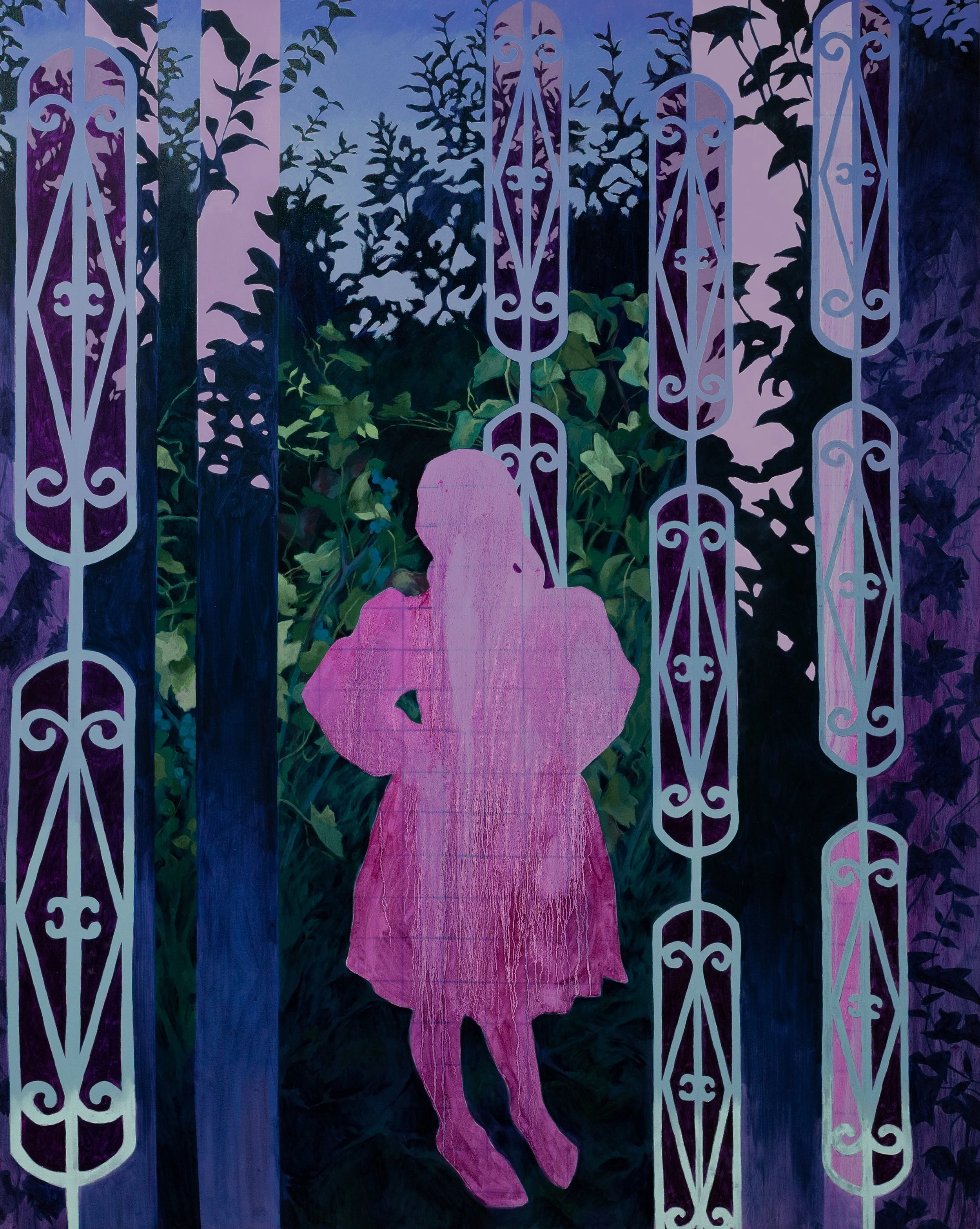
Enrooted, 2026; Oil on canvas, 5' x 4'
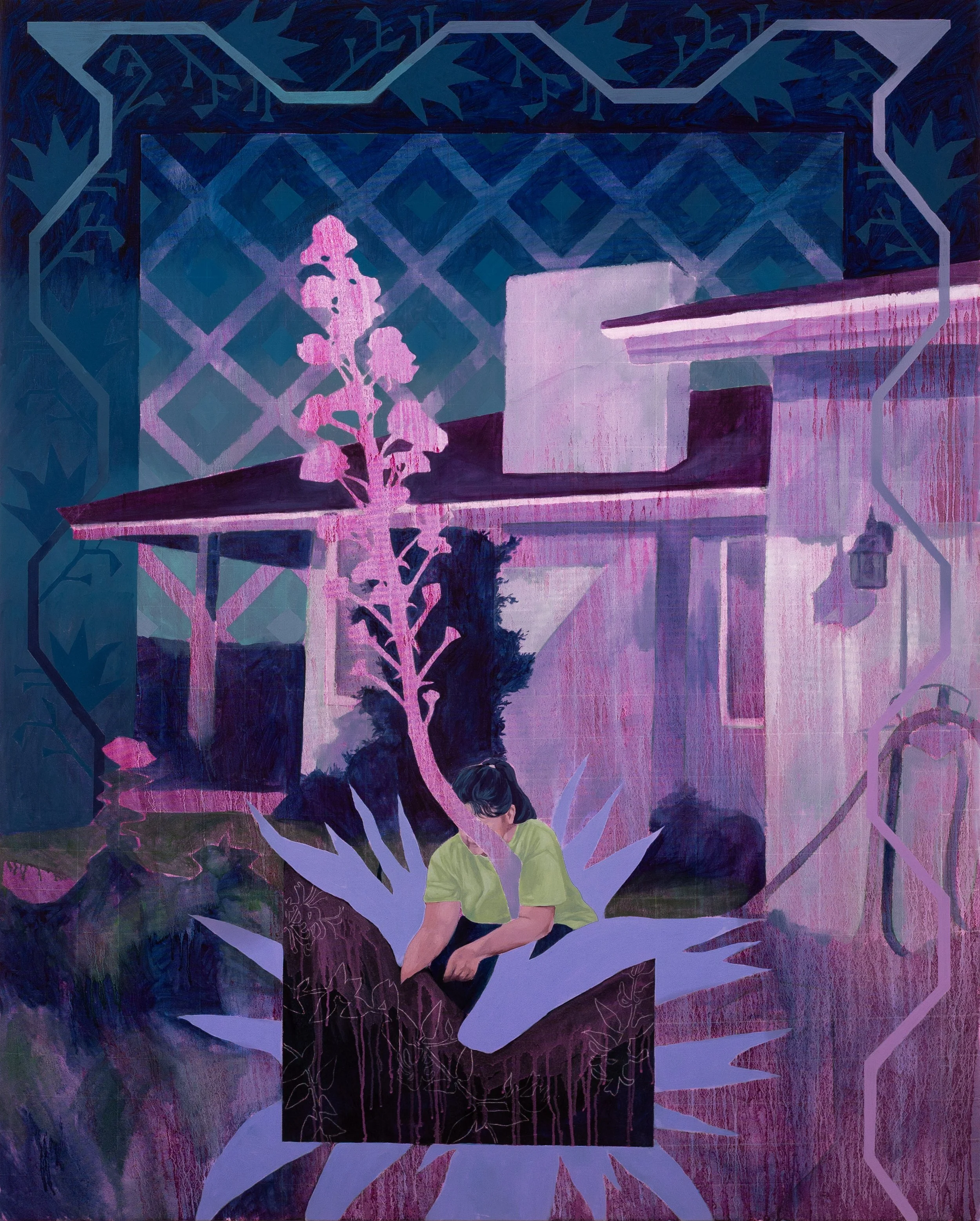
On the Threshold, 2026; Oil on canvas, 5' x 4'
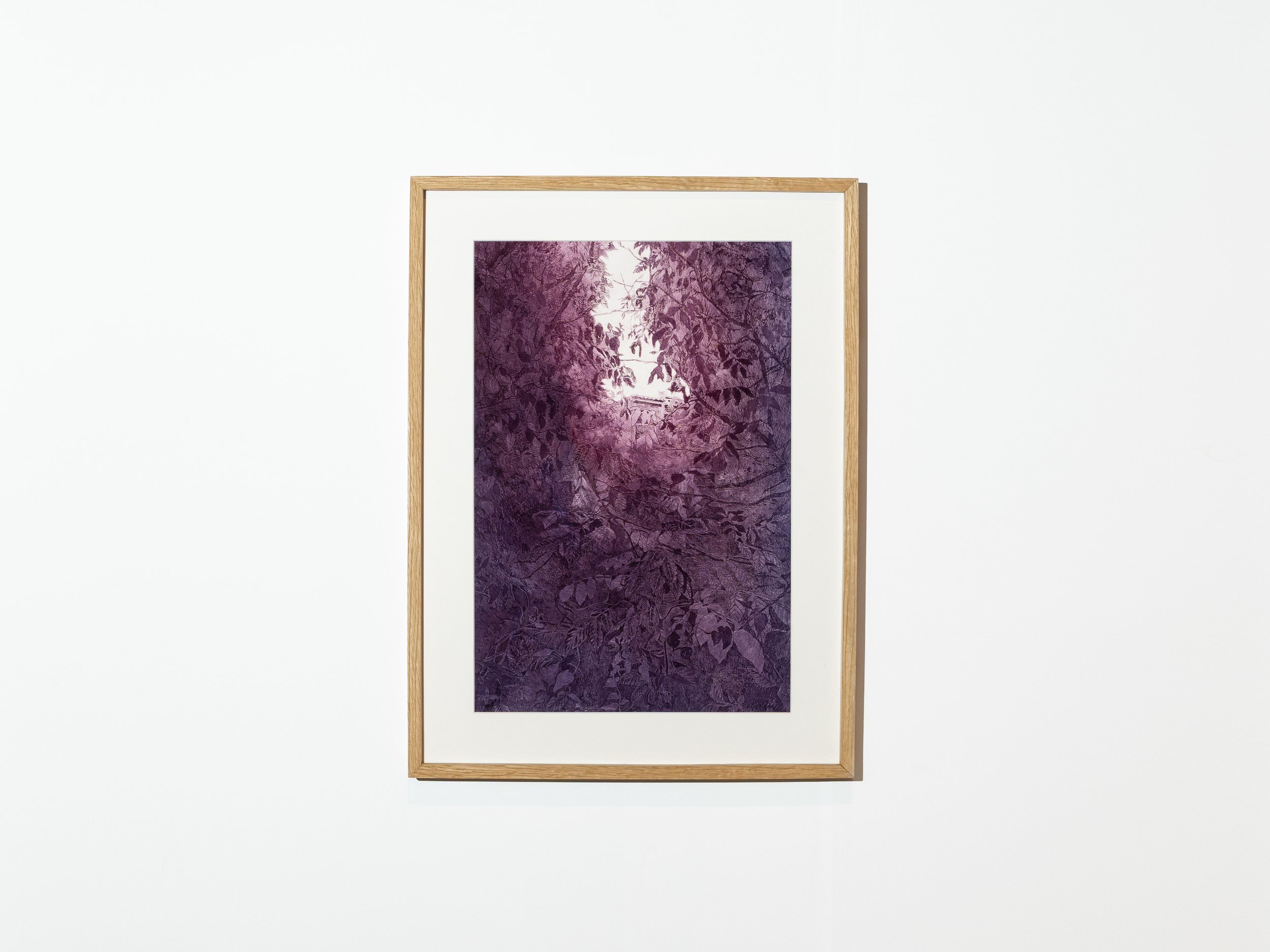
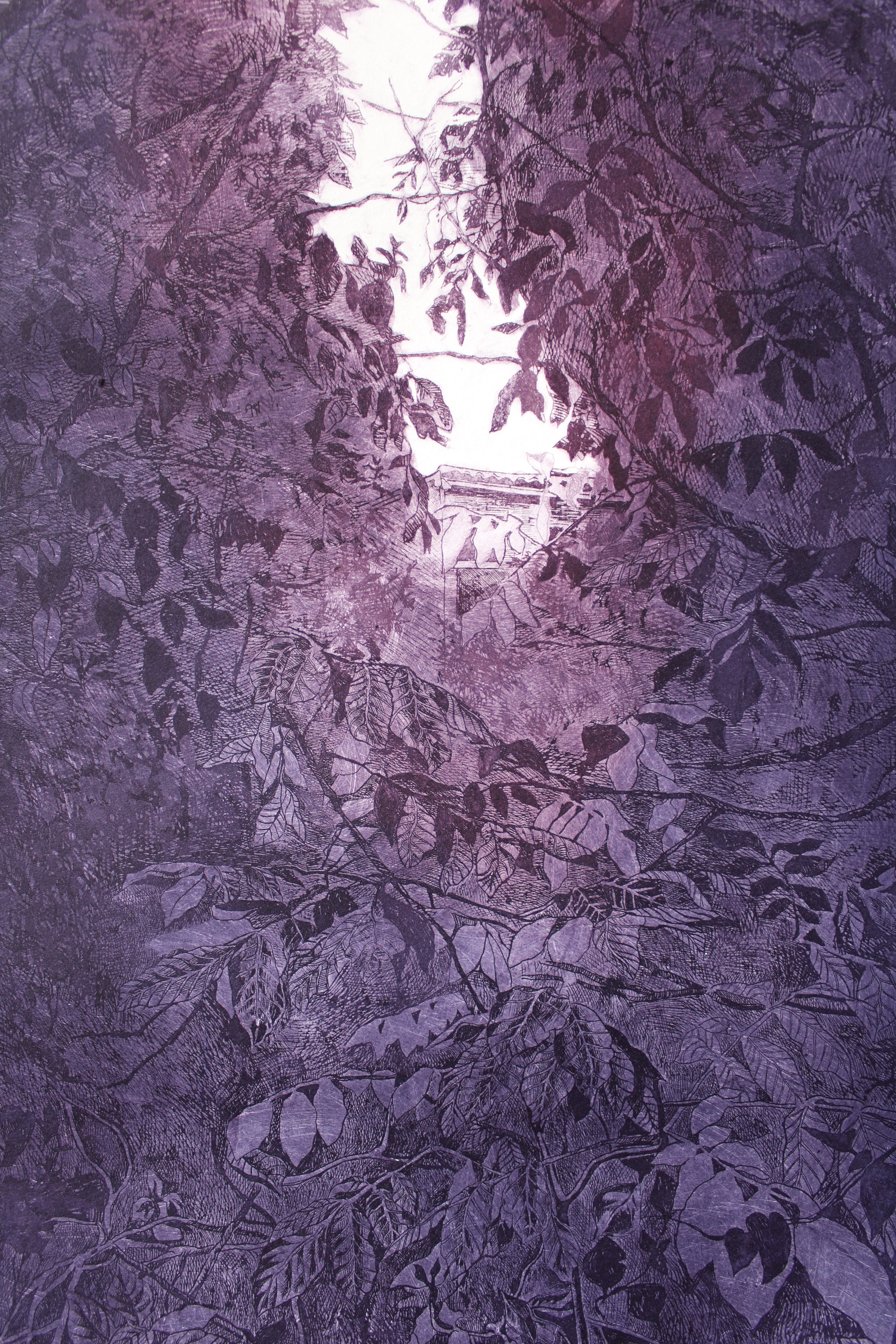
From the same roots, together we grow, 2024; Etching, 18" x 12"
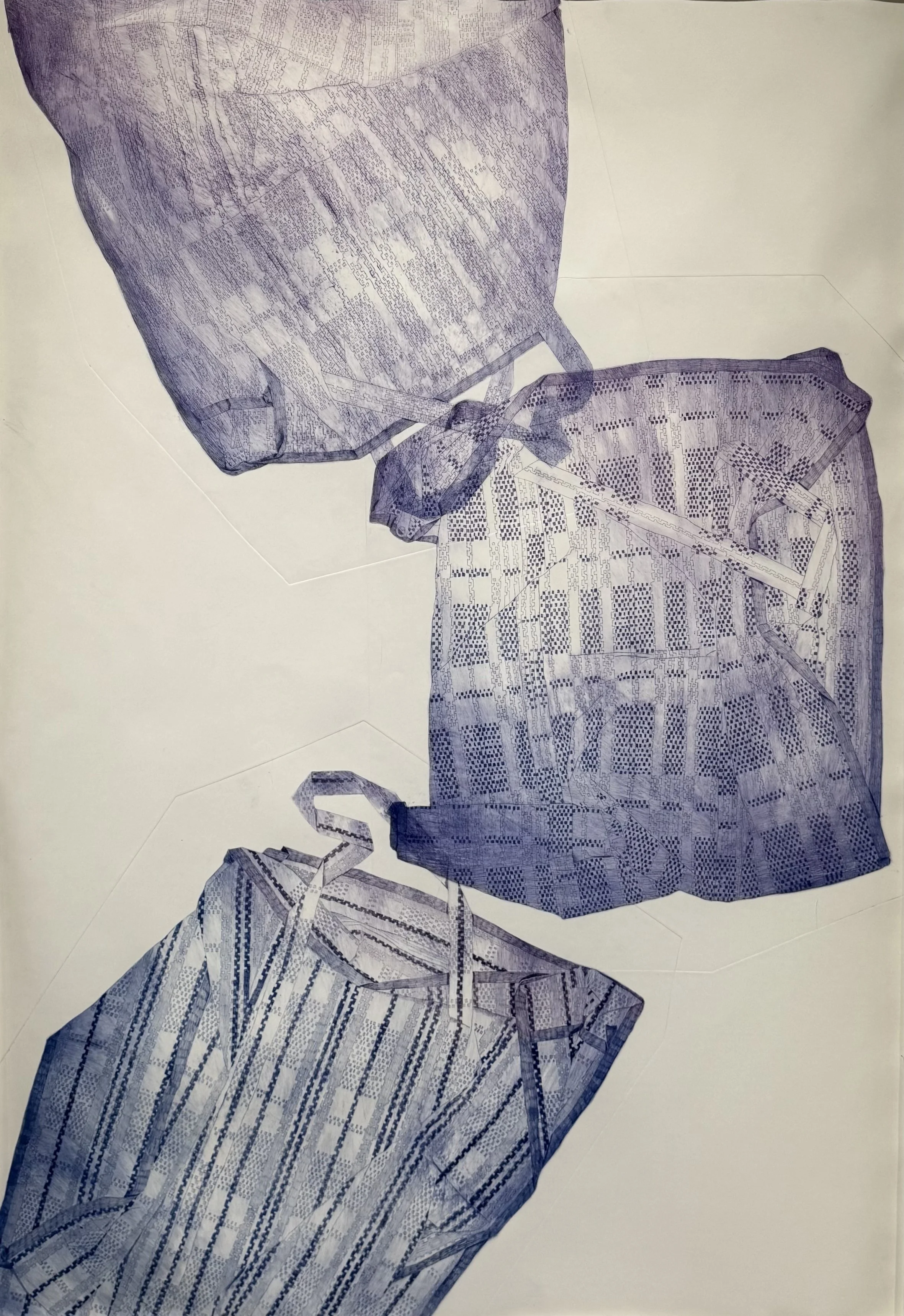
Blueprints, 2026; Etching, 44"x 30"
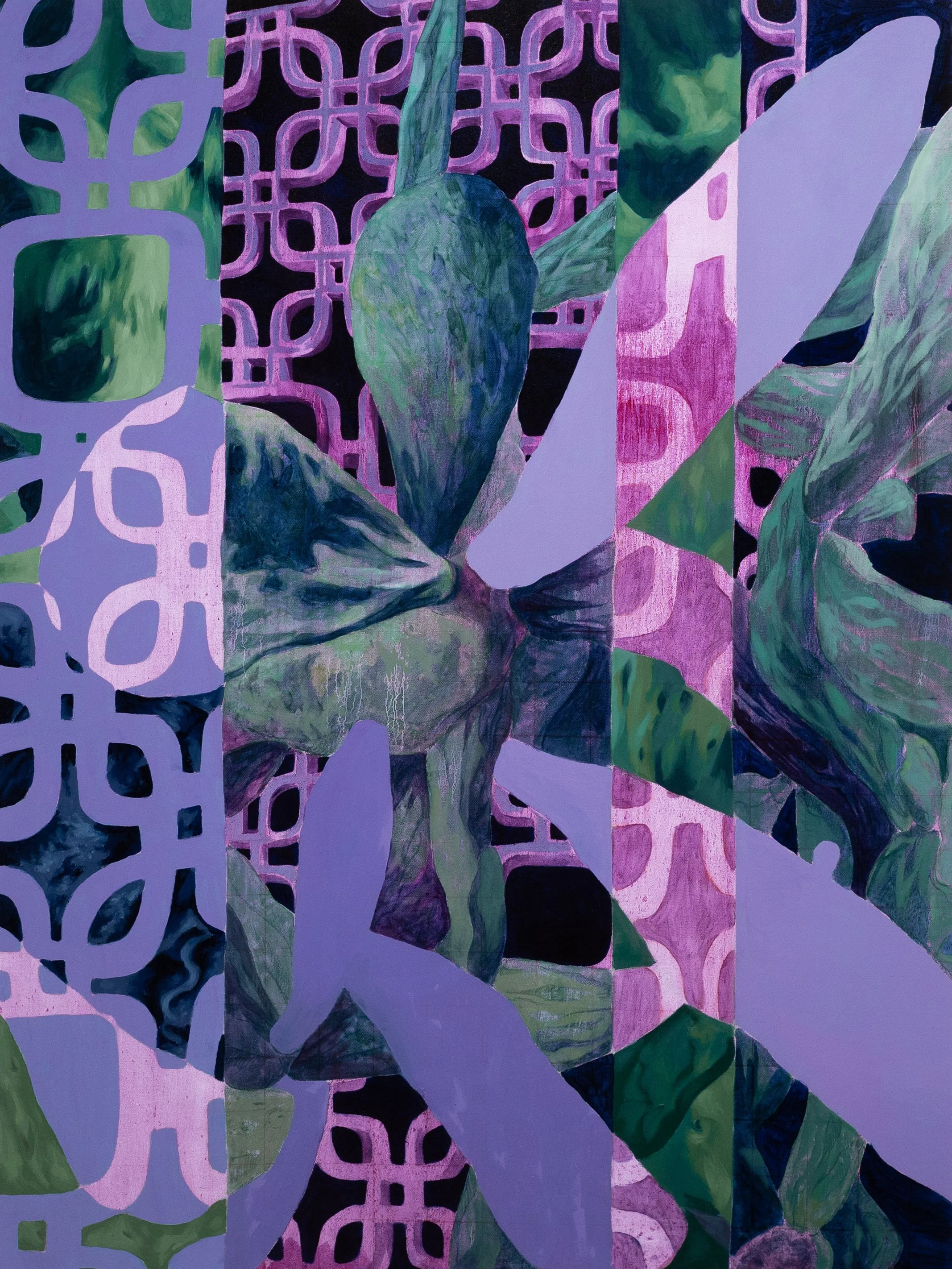
Interlude II, 2026; Oil on canvas, 3' x 4'

Interlude I, 2025; Oil on canvas, 3' x 4'